Click Networks - IT Support Glasgow

Click Networks - IT Support Glasgow
Showing posts with label click networks. Show all posts

Monday, 18 November 2013

Police warn of 'ransom' spam targeting UK users

Tens of millions of UK internet users could be at risk from "ransom" email spam seemingly sent from financial institutions.

Read the full story here: http://www.bbc.co.uk/news/technology-24964426

The email has an attachment that looks legitimate but is malware that encrypts computer files.
If the attachment is opened, a displayed countdown timer demands a ransom to decrypt the files.
Small to medium businesses seem to be the target and the National Crime Agency says there is significant risk.

Lee Miles, deputy head of the National Cyber Crime Unit, says: "The NCA are actively pursuing organised crime groups committing this type of crime. We are working in co-operation with industry and international partners to identify and bring to justice those responsible and reduce the risk to the public."

The malware installs a piece of "ransomware" called Cryptolocker on computers running the Windows operating system. The ransom demands that the user pay two Bitcoins, a virtual currency, that would be worth £536 to release the decryption key.

Reports suggest that people who have paid the ransom have not had their files decrypted and it has been impossible to restore encrypted files.
  
The NCA said it would never endorse the payment of a ransom to criminals and warns that there is no guarantee that the people behind the demand would honour the payments.

An NCCU investigation is seeking to identify the source of the email addresses used.
Computer users are being warned not to click on any suspicious attachments, to have updated antivirus software and to regularly back up files. If a computer is infected the advice is to disconnect it from the network and seek professional help to clean the device.

The NCA said that anyone infected with this malware should report it via actionfraud.police.uk.

For more information on how better to protect your business or customers please contact the IT Support Experts at Click Networks on 0141 530 9116 or visit our website: www.clicknetworks.co.uk for more information on how to clean an infected device of harmful malware.

Wednesday, 13 November 2013

Microsoft Office 365 What You Need To Know

Firstly, What is Microsoft Office 365


It is secure, anywhere access to email and calendars, Office Web Apps, instant messaging, conferencing, and file sharing. See how Office 365 makes easy to communicate, create, and share in the cloud.

Explore what Microsoft Office 365 can do for you


  • Office 365 adds more power to the Office you already know and use by making it easier to communicate and collaborate with others.  
  • Access your email and calendar from your computer, the web, and smart device.
  • Launch and sustain a professional website for your business. 
  • Connect immediately with colleagues. Set up and conduct online meetings.
  • Share documents and collaborate with colleagues online.  
  • Create, store, and edit Office docs online. 
  • Get virtually anywhere access on nearly any device* so you can be productive on the go.  
  • Microsoft helps keep your data safe and private.


Why choose Microsoft Office 365?


Easy to setup and use

  • Get started in minutes. Setup new users in seconds
  • No training needed. Use Office tools your team knows and loves

Work anywhere

  • Get virtually anywhere-access on nearly any device*
  • Work on your Office files online or offline

Worry-Free IT

  • Stay safe with our built-in anti-virus and spam fighting technology
  • Count on 99.9% uptime
  • Lower costs vs. on-site solutions
As an experienced Cloud provider, Click Networks can offer to provide you a free trial of this excellent Microsoft based service which can transform the way your business operates and budgets for its IT. Please contact us and we can get your trial up and running quickly so you can begin experiencing the brilliant Office 365 for yourself.

For more information on Office 365 please contact the IT Support experts at Click Networks in Glasgow on 0141 530 9116 or visit our website here: http://www.clicknetworks.co.uk

Wednesday, 23 October 2013

Social Media: How Much Do You Really Need to Invest?

Everywhere we look these days, companies are proudly touting their social media presence. Restaurants, car dealerships, ecommerce stores, even paid parking lots – they all want you to “Like” them, and are conceivably spending significant dollars to entice followers. But does social media make sense for every business? Can anyone afford to not be in the game?

The answer is mixed. Yes, everyone needs some social media presence, for reasons we’ll explore, but not every business should be required to spend a great deal of time or effort.

There are key aspects to the social landscape that all businesses need to be mindful of, or risk embarrassment or failure. Yet it seems most business owners think it’s an all or nothing cause. This attitude can waste precious marketing dollars, so read on to see where your business falls in the mix.

 Why Totally Ignoring Social Media is Dangerous


It’s obvious why many business owners would want to shut out the social stratosphere – it’s often filled with high-maintenance customers that only want to complain or score a discount or freebie. Yelp is a particular thorn in the side for many local entrepreneurs, but ignoring the complaints of the masses unfortunately does not make it all go away. Just the opposite, it sounds the alarm.

Let’s put it this way – if the internet has even a small smattering of complaints about your business that have gone unanswered, you’re in big trouble. Negative reviews can live in infamy for many, many years; like it or not, you need to have a staff member that is dealing with customer feedback. Don’t let the web engage in conversations about your company if you’re MIA. Be there, keep the record straight, make good on complaints, and be proactive about staying connected to your audience.

Need more incentive? If you don’t maintain a social media presence for your brand, someone else might do it for you, with highly damaging results. Just ask Exxon. When some clever hackers created a fake Twitter account called “Exxon Cares” this year, their lack of due diligence in watching their brand’s social presence resulted in a major PR coup. The hackers sent a gaggle of sarcastic tweets as a result of the Exxon Pegasus pipeline rupture. Because Exxon took eons to notice, the hackers had a field day, garnering hundreds of followers, retweets, and comments. It’s impossible to gauge how much this hurt Exxon’s image, or what it cost as they attempted to undo the damage, but you know it wasn’t cheap.

Finally, for the sheer sake of SEO rankings, you need to have basic contact and business information on sites like Facebook and Google+. Search engines are giving more and more credibility to social signals, and failing to have at least a minimal appearance can wreak havoc on your search results.
You know who would love it, however, if you did ignore the social space? Your competitors. If they’re working hard to build an audience of loyal customers, they would be honored and thrilled to steal your potential fan base.

 How Much Should You Spend? That Depends On Your Industry.


OK, so it’s clear that the head-in-the-sand approach isn’t beneficial regarding social media. This does not mean everyone should hire a full-time social media expert and go crazy on every single platform. In order to wisely spend your resources, it’s imperative you consider what kind of company you run, and the relevance of social media to your operation.

Let’s talk about some examples. Local businesses like coffee shops, restaurants, mechanics, dry cleaners – just about anyone who offers goods or services that customers regularly need or want, those folks all need a strong social presence. Non-profits are no-brainers too, as is any ecommerce site or fully digital business.

Who doesn’t need to go crazy in the social space? Folks that own niche businesses that customers only reach out to in isolated cases. Like paid parking lots, for example. Likewise, businesses that deal with the darker parts of life. Divorce lawyers. Government agencies. Funeral homes. Have you seen some of these funeral home pages on Facebook? One of them even posted a “business happy hour” (that has since been removed.) Seriously, do they actually think this will entice folks to choose their funeral services during a time of need? It’s bizarre, and frankly, more than a little distasteful.

Again, all of these businesses should absolutely have a basic social presence. The question is whether or not to invest hours and hours a month in creative campaigns and audience engagement. Divorce lawyers need testimonials, they need to be found on search engines – but they do not need to run social contests, to poll their fans, or to post content daily.

Social media is not, despite popular belief, free advertising. Creating a truly engaged and loyal fan base is expensive and time consuming. If it makes sense for your business, you’ll get lost in the media dust if you don’t jump in with full force. But be wise about your words and reputation, or your efforts may produce the opposite effect.

What kind of social media presence have you found works for your business? Have you opted for a “less is more” approach, gone all-in, or ignored it all together?

For more information on anything you have read in this article please call teh IT support experts Click Networks on 0141 530 9116 or visit our website here: http:/www.clicknetworks.co.uk

To read the full article visit:  http://www.sitepronews.com/2013/10/23/social-media-much-really-need-invest/

Wednesday, 9 October 2013

Windows XP support cut-off dealine looms!

Support for Windows XP will end six months from today as Microsoft tries to draw a line under its ancient operating system. However, firms of all shapes and sizes are still ignoring this looming issue despite the huge risks it will cause.

From 8 April 2014, Microsoft is ending all support for the platform, which will mean no more security patches or software upgrades unless firms pay for custom support. This has the potential to leave businesses open to attack on out-of-date and unmonitored systems.

However many firms have shown unwillingness to address the issue. Research back in April, to mark the one-year countdown to the deadline, revealed that over half of UK firms had done nothing to prepare for a migration to Windows 7 or Windows 8.

Microsoft said last month that it is finally starting to see businesses move away from Windows XP, but given that there is now only six months until the deadline it may be too late.
Adrian Foxall, the chief executive of application and software migration firm Camwood, which commissioned the research published in April, said any firm that has left it too late could face serious issues.

“Some of the really large enterprises are not going to be off XP in time and this will cause risks in terms of security and compliance, so they are going to have to get some sort of custom support," he told V3.

"However, that is not something Microsoft is really going to want to encourage or offer for all but the largest firms, so I do think we will see an acceleration in the next six months, but firms could still be left exposed for a while."

He added that given the short time frame it will be hard for firms to move their entire systems, so a focus on the most mission-critical apps is required. He also said it was unlikely that Microsoft will extend the deadline, especially as it has already done so before.

The issue of XP migration has also caused debate among V3 readers, with some saying they are still to move from the platform and are dubious that all organisations will be able to migrate.
"Still stuck on XP at work. Many modern programmes don't work with it, I think. No sign of Windows 8 on the horizon here either, only 7. Why?" said one. "The NHS is still using XP because the majority of medical software is old and won't work on 7 or 8," said another.

The huge user base for XP also means many in emerging markets are on the platform and will almost certainly not be able – or willing – to upgrade, which could also cause issues.

"XP has a real hold in India and I do not see those users giving up XP anytime soon. The reason is simple. XP runs on the lowest-powered PCs and laptops, and it is not broken, so do not fix it. Except MSFT [Microsoft Corporation] is now breaking it by not supporting it soon. The horns of a real dilemma."

Others have said, though, that firms only have themselves to blame if they have not taken the necessary action by now to move to a new operating system.

“XP is 12 years old. There have been three operating systems released since then. I have no pity for anyone still using XP. They have had plenty of time to plan for a migration to a more modern operating system,” wrote one.

“I moved from XP to 7, 10 months ago. It was an easy move,” said another.

If you would help advice on switching from XP to Windows 7 call the IT Support Experts at Click Networks on 0141 530 9116 today or email us at info@clicknetworks.co.uk.

Please visit our website for more IT Support and to drop us a quick message: http://www.clicknetowrks.co.uk 

Read the full original article here: http://www.v3.co.uk/

Monday, 23 September 2013

Office 365 goes to work on an Android

Office 365 on Android Copy Item Screenie
Hands on Unlike the video editing or CAD workstation beasts that are still utterly reliant on Windows, Android is slowly evolving into a workable platform for basic productivity.

Browsers are becoming passable. Onboard applications are decent and there are an ever-growing number of applications designed for both touch input and mouse.

Yes, our little Android is growing up – that is, of course, if we ignore the total lack of a usable productivity suite.

Android is sneaking up on five years of general availability and it still doesn't even have a word processor that can compete with Microsoft Word 2.0 running on Windows 3.1.

If you want to paw at your screen like a primitive, there are plenty of applications to let you consume content others have made. There are even a few applications that will let you edit a word document or enter some numbers into a spreadsheet. Slowly.

Touch input has severe limitations. The first is a maddening upper limit on input speed and accuracy defined by trying to hit touch targets that are significantly smaller than your fingers and offer no tactile response whatsoever. Editing, formatting and related tasks are byzantine in a touch-screen world.

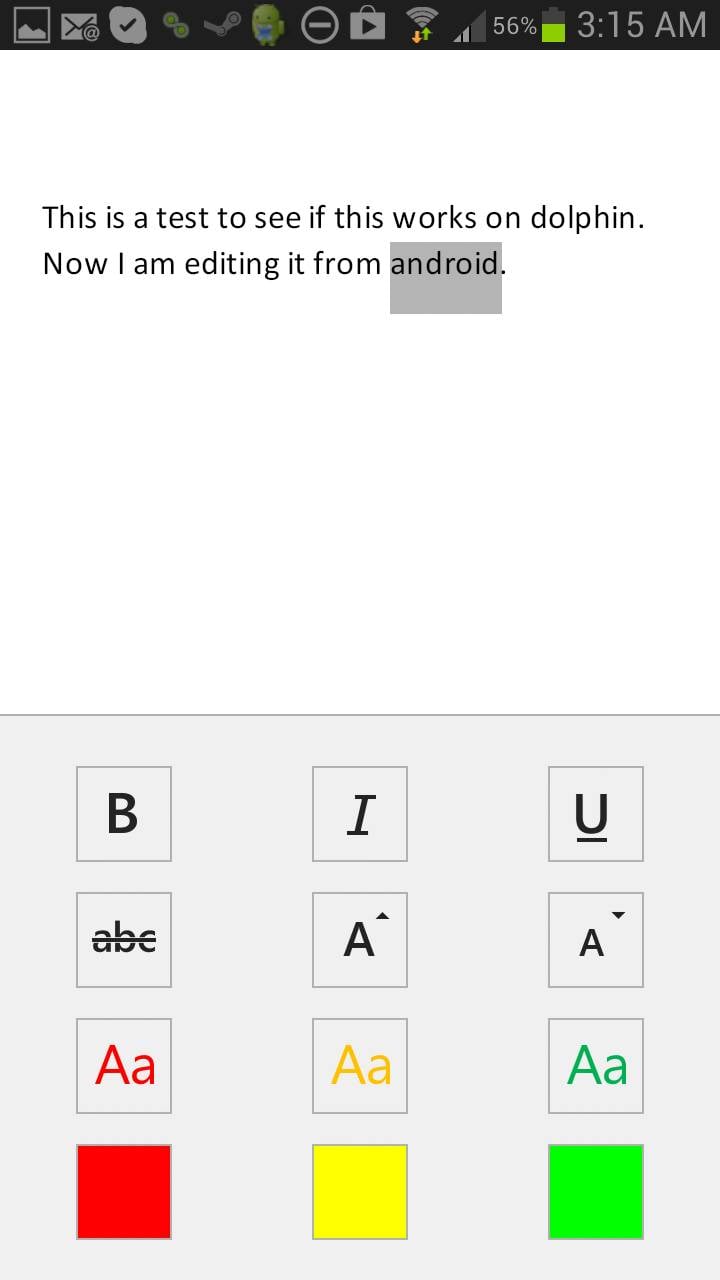
Consider the humble task of highlighting a block of text. On a touch screen you have to stab exactly the right spot, hope the device recognises the great big blob that is your finger, press, hold and then wait for the selector widgets to pop up.

After that you drag them around until you have highlighted the relevant text, go find a touch target that says "cut" or "copy" and then do something with that text.

In the time it has taken a touch-screen user to do that, I have already moved the text where it needed to go and written another four paragraphs of useful text. Touch screens are simply terrible for real work.

One man and his mouse

Despite this, I keep getting users who want me to make their Android devices into all-purpose endpoints. They have an Android phone with four cores and more RAM than that Acer Aspire from the mid-2000s that is wheezing its last.

They have a Nexus 7 or an Asus Transformer that they carry everywhere and they don't want to haul around some ageing notebook that gets the digital equivalent of three miles to the gallon and doesn't make it through a full-day conference.

Android is not going away, so how do we get something usable on there? The answer depends entirely on the device you have, the version and all the other irritating little things that make Android ecosystem fragmentation such a topic of legitimate complaint from developers.

In my opinion, the best option currently available for a productivity app running directly on an Android device is Office 365's web app. The latest version is amazing. It beats Google's efforts and is so far ahead of everyone else that at this point trying to catch up would be a depressing endeavour.

Run Dolphin in Desktop Mode

To get the Office 365 web app working on an Android device – assuming you have a subscription – you need to set your browser to request the desktop site.

Chrome can do this out of the box. Dolphin can do it by enabling the "desktop toggles" extension. Unlike Chrome, when you turn the extension on in Dolphin it stays on and passes desktop headers to all future sites.

Run Chrome in Desktop Mode

The problem is that the Office 365 web app simply doesn't work on most Android devices. Chrome flatly refuses to treat the mouse like a mouse. You can't highlight things like an adult and forget right-click context menus.

Dolphin is somewhat better. It doesn't understand the concept of multiple buttons on a mouse and thus you can't get your right-click context menus, but at least it passes the primary mouse button back to the Office 365 application so we have highlighting, dragging and dropping.

Office 365 is actually rather well designed for single mouse button scenarios, so although the lack of a context menu slows me down, it is not a show stopper.

Office 365 for Android on Dolphin

Hardware definitely limits possibilities. My first-gen Asus Transformer's 1GB of RAM simply isn't enough. The anaemic Tegra 2 struggles to keep up, and frankly the whole thing is a mess.

The quad core and 2GB of RAM in my Galaxy Note 2, however, seems to do the trick. Dolphin has no trouble here. Off I go writing articles.

Phone fodder

Microsoft has created a downloadable Office 365 app for Android phones. That naturally lasted about eight seconds after the announcement of availability and you have to be deaf, dumb and blind not to be able to find the .apk file if you go looking for it.

Office 365 for Android Text Modification OptionsAt first, I was rather irked with Microsoft. I figured it was doing something irritating like protecting its office monopoly by restricting the Office 365 app to phones.

But the rationale is far more mundane. In truth, the app is exactly right for a phone and useless for a tablet.

You won't be writing articles on a phone. Not even a Note 2. (I have tried. It causes all of the sads.) You might open a document, make a few token changes and save it… and that is all the Office 365 app is good for, though you can create documents and spreadsheets if you wish.


Microsoft's efforts with the Office 365 app are in line with the previous yeoman's work done on the OneNote and Lync apps. They are absolutely top-quality applications for the intended target market.

Target practice

I expect Microsoft will have to write a separate Office 365 app for Android tablets, assuming we can convince it that there is enough of a target market there to care about.

It is really a chicken-and-egg situation. People steer clear of Android tablets because the tablets don't have a good productivity suite. They don't have a good productivity suite because there is no market for it.

The more important question for Android users is why would Microsoft be interested in jump-starting the Android tablet market?

Anyone who starts using Android tablets for productivity won't be coming over from Apple. They would be choosing Android instead of Windows and there is not much profit in that for Microsoft.
In almost every technical aspect¸ Windows RT is a better operating system. The problem is that Microsoft blew the launch and missed a very narrow window.
The tablet market is still very much up in the air
Microsoft completely miscalculated the price people would be willing to pay, didn't include Outlook, had no app ecosystem to speak of and artificially restricts developers and end-users from turning Windows RT into a full-blown productivity device.

Despite this, the tablet market – and dominance of the next generation of endpoints – is still very much up in the air. Google constantly machine guns its own feet with exactly the same sort of short-sighted protectionist nonsense that has been hindering Microsoft for years.

The allergy to mice in Chrome for Android is one example: Google sees mice in Android as a massive threat. Android is local-application based.

If people could use a keyboard and mouse with Android properly, then they would have no reason to move away from the local-application model. Google's future is bet on SaaS applications and tied to Chrome OS.

The browser rules

Under no circumstances does Google want Windows to be replaced by Android. Android could fork and suddenly Amazon is somehow a player. Google wants you in the browser where it can own you.

Office 365 for Android Copy Balls

When push comes to shove, however, what people actually want is Microsoft Office on their Android devices. We can get it on our phones. The lucky few can get a mostly working version in their browsers. The rest of us will work around the limitations and wait.

The redefinition of the endpoint brought about by the mobile revolution is still underway. With the release of a working Office app for Android phones – something once considered an outright fantasy – all bets are off.

Read the full article here:  http://www.theregister.co.uk/2013/09/20/office_365_on_android/

For more information on anything you have read in this article please contact the IT Experts at Click Networks on 0141 530 9116 or visit our website: http://www.clicknetworks.co.uk 

Monday, 12 August 2013

Google Launches New Gmail Tabs To Bad Press

A couple of months ago, Gmail launched a brand new tabbing system for inboxes, sending users and marketers into a veritable frenzy. The new tabs aim to organize your inbox into three core sections: Inbox, Social, and Promotions.

Your default inbox will mostly contain personal or business-related emails that are likely from people you know directly. Social contains blasts from social networks, like LinkedIn connection requests and Facebook mentions, as well as news from any social tools you subscribe to. Promotions is pretty
self-explanatory – this ought to contain consumer-focused newsletters, discounts, and related marketing materials.

It’s obvious why marketers would specifically be worried – will their meticulously crafted newsletters be sent into utter obscurity, now that users must click one more section to read them?
The answer is simple: there’s nothing to panic about. If you already create quality content that your audience wants to read, they will still get your blasts. If you’ve been sending meaningless drivel, however, you’ll still be ignored or marked as spam.

See? The sky isn’t falling. Here’s proof.

Users are Still in Charge
The new tabs are simply a way to keep our oft-cluttered inboxes much more organized. Some, however, are erroneously touting that Google is getting bossy.
Take the team of customer support experts HelpScout. In a recent article about the new tabs, they had this to say:

“The premise behind these changes is sound, but there’s a major concern to be addressed: Google is now organizing your inbox for you, and it can be argued that they are filtering messages without your consent.”

Without my consent? That’s a bit dramatic. The truth is, Gmail users still have full control over their inboxes. Google now attempts to organize things into folders, but we all have a very easy way to override the filtering. Nothing is etched in stone.

See an email in your Promotions tab that you feel belongs in your default inbox? Simply drag it from promotions onto the Inbox tab, and wahlah, it’s official. At that time, Gmail will ask if you’d like to move all emails from that sender into your inbox – if you click yes, it’s a done deal (until, of course, you move it elsewhere.)

Google hasn’t become the email police. They just decided to respond to the bazillions of users complaining inboxes were too crammed and messy.

Now, the real question is, are the new tabs preventing folks from reading newsletters? Let’s investigate.

How the Tabs Affect Online Marketers
We will first tackle this from a user perspective. The verdict’s still out about whether or not this will decrease readership of marketing-centric emails, but regarding those that are actually appreciated by consumers, they will still get read.

The Promotions and Social tabs illuminate nicely when new email lands in either one, and it’s incredibly simple to click over and see what’s landed. If you, as a marketer or business owner, have worked hard crafting worthwhile emails that users have voraciously consumed in the past, expect that to continue now. Organization is not a barrier to entry.

Most people already organized their email consumption; meaning that when one has free time, one dives into the promotional type emails, and responds accordingly. Nothing dramatic will change with the new tabs, except that perhaps you can’t get away with sending bad content anymore. Those days have been numbered for some time anyway.

The concerning part of all of this, however, lies in the additional way Google is using the Promotions tab. They are now sending unsolicited advertisements through this tab, thinly veiled as promotional emails. It’s easy enough to spot them – they have an “ad” label – but it still smacks of a sneaky way to shove more ads at us. Still, that’s how they make money – and since they’re only doing it in the promotions area, it’s not so heinous.

Don’t Believe the Negative Hype
Since the tabs were released, the internet has been teeming with angry marketers making extremely dramatic claims. Many quote a recent MailChimp survey that tracked early statistics on newsletters, and they did show a slight decrease in readership. But please don’t jump to conclusions like the masses, as this survey did not capture a huge majority of Gmail users that just recently enabled tabs. In other words, it was a premature survey with limited reach. Nothing to bet the farm on.
So what should you do? First, don’t panic. There’s no data supporting the negativity and fears, so hang in there. Next, follow the steps below to ensure you’re creating content your users want.

How to Weather the Gmail Tab Storm
Be proactive in your approach now that the tabs have launched; let them motivate you to create better marketing materials. Here are some top tips:
  • In your next communication (and all future blasts), ask your users to move your content to their primary inbox, and link to easy instructions that tells them how (either through the drag/drop process or reverting back to the Classic view.)
  • Study exactly how Gmail is filtering all communications, and take steps to prevent your other sends from landing outside the primary tab.
  • Concentrate your communications on valuable information in your niche or industry, and not so heavily on your own company promotions. In other words, create content people actually want to read, and you seriously have nothing to worry about.
Why Marketers Should Embrace the Tabs
There is a big upside to these new tabs that few are discussing. These changes may even increase the readership of newsletters overall. Think that’s crazy talk?

Consider it this way – in the old model, all emails were crammed into a single view, with little rhyme or reason. That means your company newsletter had to compete with an email from mom, from various critical business partners, or from little Tommy who just learned to write. You aren’t going to win that battle for attention.

But you may very well earn the click-through when you’re sitting next to other, less interesting promotional sends. If a user clicks the Promotions tab, they know exactly what to expect – you have their attention. It is therefore up to you to not lose it in those critical moments.

See, it is possible that Gmail’s new system is a win-win. I challenge you to view this as a glass half-full scenario and see what the data tells us in the near future!

Read the full article here: http://www.sitepronews.com/2013/08/12/google-launches-new-gmail-tabs-the-fallout-report/

For more information or advice on any of the topics raised in this article or with more specific IT Support questions why not contact the experts at Click Networks today with your query. Visit our website for all contact information and support here: http://www.clicknetworks.co.uk

Monday, 29 April 2013

3 Essential Employee Tech Security Steps

Due to the populartiy of our last article on some of the misconceptions of computer viruses and steps to avoid them, below are 3 more essential tech security steps you can teach your employees.

 Think about your office and the people you have sitting behind the computers.  Or think about your remote workforce in their home offices or on the road with their laptops and mobile devices gripped firmly in their hands.  Whether you realize it or not, all of these workers play a vital role in protecting your company from a security breach.
You may feel pretty safe and secure with all of the latest and greatest security innovations installed, but if your employees don’t adhere to safe computing practices and use the technologies properly, you may be at risk, even more than you think.  Many small businesses don’t have an IT staff so it takes time and training to get employees to maintain data security.
Here are some tips to ensure that your work force is ready to defend your business and its valuable data.

1.  Email Responsibility:  The level of sophistication in targeting individual email accounts has become even more threatening by hackers and scammers.  How many times have you received an email trying to get you to click on this or that?  One simple click can expose business and personal information without your employees even knowing they have done anything wrong.
E.D.S.C.B. to protect your valuable business information: 
  • Exercise judgment before opening email attachments. Suspicious emails or email attachments should not be opened.
  • Disable the option to automatically download attachments. As a convenience, some email programs will offer automatic download, but if a harmful attachment comes through, it can lead to big trouble.
  • Scan attachments with antivirus software before opening or downloading to your computer.
  • Complex email passwords. Include upper and lower case letters, numbers and punctuation marks or other symbols to make passwords more complex.
  • Beware of any attachment with an “.exe” filename extension, which may begin executing a program as soon as the attachment is opened.
2. Wireless internet connections merit caution:  
Wireless internet connections are a remote worker’s best friend.  But public wireless hotspots can be a cybercriminals playground when open networks don’t encrypt data, emails passwords or other information.  Remind your employees when they have the choice between a secure wireless connection, which will require a password, and a public hotspot, they should always choose the secure connection.
However, there will be times when employees may have to use a public hotspot Therefore, they should know how to make sure their firewall is on.  They should also know how to disable file and printer sharing and how to make their folders private.
Manage these tasks through the computer’s System Preferences or Control Panel, where the internet, user settings and security can be reviewed and adjusted.  If you need advice on managing these tasks, go to your computer’s help and support index.
Another option you can utilize to safeguard data is by protecting it on a corporate network or in the cloud.  There are numerous cloud storage options for small businesses.

3. Use smartphones conscientiously:
Employees commonly do work related tasks from their personal mobile devices, which opens new opportunities for security breaches.
Consider developing a Bring Your Own Device (BYOD) policy that includes parameters on how and when employees can use their personal mobile devices for work purposes.  Make sure your policy includes specific guidelines for smartphone security, like a password policy, list of supported devices and others that are not allowed to be connected to the network and a protocol for installing applications.  These can become easy entryways for malware if not attended to properly.
A lost or stolen smartphone can also open up an opportunity for a data breach.  You can require your employees to use tracking services offered by carriers like AT&T or Verizon to find the location of lost devices, remotely lock them or erase data.  For more assistance in developing a BYOD policy that’s right for your business, consider getting guidance from a local IT provider or expert.

Read the full article here: http://blog.computerservicenow.com/posts/2013/03/06/teach-your-employees-3-essential-things-about-tech-security/

For more information on anything you have read in this article or about any IT related issues, contact the IT Support Experts at Click Networks today. Call us on 0141 530 9116 or visit our website: http://www.clicknetworks.co.uk

Thursday, 21 March 2013

What is NFC? (Near Field Communication)

NFC is getting a great deal of attention as it becomes included in more smartphones, laptops, and other devices. It’s being hyped as ‘The Next Big Thing’ that will change how we use our mobile devices: everything from shopping to interacting with your home and unlocking your car.   So is this new development a “flash in the pan”, or do you foresee real world uses for such a technology?

Well, what is NFC?

NFC stands for Near Field Communication and, as the name implies, it’s a set of close-range wireless communication standards. NFC equipped smartphones and other devices can exchange information with each other with a simple tap or a wave; simply hold your NFC enabled device in the proximity of an NFC enabled media, such as a sticker, or poster.  There are many uses for such a technology ranging from the basic launching of a browser on your target device to sending an email, or to more complex actions such as controlling the lights in your house, unlocking a door or starting a car engine. Essentially, anything that can be automated electronically can be interacted with via NFC.

Which Devices Have NFC?
Many smartphones, tablets and new laptops now have NFC chips. NFC World  has an extensive list of all the phones around the world that are NFC-equipped.  Google Nexus variants have NFC, as do several BlackBerries, HTC phones, and others.

What Exactly Can I Do With NFC
NFC is most commonly associated with the “mobile wallet”—the idea that your smartphone will replace your cash and credit cards. In one tap or wave of your phone, you can pay for your shopping or redeem offers or coupons.
Beyond mobile payments however, there is a world of uses for NFC, including:
  • Providing interactive tickets or entry passes to your event.  This can be in the form of a standard ticket, or embedded into wristbands, worn by the attendee.
  • Downloading information. Advertisers and marketers can use NFC chips in posters and other promotional materials so all you have to do to get more information is tap or wave your phone (quicker than scanning QR codes, and certainly easier on the eye).
  • Ease of company travel. NFC technology can enable ‘car mode’ when your employees get into a vehicle, launching satellite navigation and disabling mobile phone capabilities, thereby increasing productivity and promoting safe driving within your organisation.
  • Provide offers, or promotions to customers via an NFC enabled key ring or badge. Free product offers or promotional codes can be programmed onto the media, which can then be redeemed in store using an NFC enabled device to scan the media.
Right now, NFC hasn’t hit the mainstream in terms of usage, but it’s the potential that’s making it pretty interesting technology.
..

Read the full article here: http://www.techradar.com/news/phone-and-communications/what-is-nfc-and-why-is-it-in-your-phone-948410 

For more information about anything you have read here please contact the IT Support Glasgow Experts at Click Networks. Visit our website: http://www.clicknetworks.co.uk or call them on 0141 530 9116

Tuesday, 12 March 2013

Samsung Galaxy S4 set to beat the iPhone


Samsung is to release its Galaxy S4 smartphone at an event in New York this week, a move that could see it beat Apple's iPhone 5 in terms of both sales and technology.

The once dazzling Apple brand has been tarnished in recent months by a series of gaffes and poor strategic decisions.

The Maps fiasco of September 2012 directly contradicted CEO Tim Cook's statement last month: "The only thing we'll never do is make a crappy product."

The brand has been perceived as a bully for its handling of the patent trials against Samsung, and it has been similarly insensitive in handling recent shareholder rows over the lack of dividends and its huge cash stockpile.

Richard Holway, chairman of analyst firm TechMarketView, pointed out that consumers are also less positive about Apple than they used to be.

"The Apple iPhone used to be ‘cool'. Now the ‘cool' smartphone is the Samsung Galaxy. Indeed there is more anticipation about the imminent release of the S4 than about any new Apple product. Today I heard the iPhone described as ‘Grandad's phone'. Insults don't come more hurtful than that!" he wrote on his blog.

The S4 is rumoured to include technology to enable users to pause video and scroll the screen simply by moving their eyes, using motion-tracking technology in the user-facing camera. These rumours are corroborated by the fact that Samsung registered 'Eye Scroll' and 'Eye Pause' as Trademarks in Europe earlier this year.

Whereas the iPhone 5 has an 8 magapixel rear-facing and 1.5 megapixel front-facing cameras, the Galaxy S4 cameras are 13 megapixel and 2 megapixel respectively.

And pictures taken by these cameras will be viewable at a higher resolution on Samsung's device - the S4's screen has 440 pixels per inch compared to the iPhone 5's 326.

There is more grunt powering the S4 too, with its eight core Exynos 5 processor running at 1.8GHz, compared to the iPhone 5's dual-core 1.3GHz A6 processor.

Both phones will compete not just for market position, but also for raw materials such as rare earth metals, and components for the latest generation touch screens, which are swallowed up by demand as soon as they are manufactured.

Some industry insiders say that many suppliers may start switching allegiance from Apple to Samsung, and give them more resource.

However, the situation could be further complicated if Apple brings forward the release of its latest smartphone, the iPhone 5S. If Apple is able to provide something genuinely innovative rather than a minor iteration on an existing design, it could reignite consumer demand and cement its position at the top of the tree.

Read more: http://www.computing.co.uk/ctg/news/2253686/galaxy-s4-could-see-samsung-beat-iphone#ixzz2NJqZAfH4
Computing - Insight for IT leaders Claim your free subscription today.


For more information on any on the technology in this article please contact the IT Support experts at Click Networks Glasgow. Visit our website here: www.clicknetworks.co.uk

Tuesday, 19 February 2013

Why are online companies moving into TV??

Figures are not out yet for how many people signed up to Netflix in the past week, drawn in by Kevin Spacey's House of Cards drama series, but it marked a significant shift in where we'll find 'must see' TV in the future.

Netflix plan to make at least five new shows a year for their web streaming service and they're not alone.

"I think it will certainly be a very exciting year for online content," notes Director of Amazon Studios, Roy Price.

Price is responsible for making original TV content for Amazon's pay subscription services - Amazon Prime in the US, and Lovefilm in the UK.

"The line between online and 'other' probably starts to become a bit blurred," he admits, adding that Amazon Studios currently has six shows being piloted.

"Right now we have a range," says Price, "we have kids, mostly focusing on pre-school educational content.

"And then on the adult side I would say it is all right now, half hour and comedic in nature."

Microsoft's plans aren't quite as fully formed yet but creating a TV studio in Los Angeles this year is the main objective with original content from all genres being considered.

The programming would sit on Microsoft's Xbox live and use the interactivity that service can offer.
And then there's YouTube, owned by Google.

The online site recently launched its original channels initiative with 20 new channels coming from the UK.

"YouTube gave an advance on future advertising revenue to a few channels," explains Google's Zayna Aston, "to basically help kick start the production of original content on the platform."
'Food Tube'
 
One of those channels is Jamie Oliver's Food Tube which already has 143,000 subscribers, 13 million video views, and it only launched on 21 January 2013.

Whereas Amazon, Microsoft and Netflix own their content, YouTube does not, choosing to concentrate on its proven technology platform instead.

So should traditional TV networks feel threatened by their online competition?

"I think it will be interesting to see how everything evolves with respect to all the different channels and sources of content," muses Amazon's Roy Price.

"And for now all we can do is create the best service we can and certainly to date we co-exist quite amicably with all of our channel and other programming partners."

Traditional TV channels are not being complacent, with audiences increasingly using on demand services such as itv player, 4OD and the BBC's iPlayer.

Victoria Jaye oversees all of the BBC's TV content online and aside from recent statistics that revealed a 177% year-on-year increase in the use of mobiles and tablets to watch shows on iPlayer, there's been another shift.

Jaye says in 2008, 25% of people coming to iPlayer were just browsing.
That's now risen to 42% marking "a change in iPlayer from this catch-up product or utility to a sort of discovery or entertainment experience".

"I think it's really fantastic," reflects Jaye, "that we are seeing the on demand market become creatively competitive with people like Netflix originating content.

"We really want a creative competitive on demand market so for us this is, 'Bring it on!' We're excited."

Please read the full article here: BBC NEWS

For more information on anything you have read, please contact the IT Support Experts at Click Networks in Glasgow. Visit our website: http://www.clicknetworks.co.uk/ 

Monday, 11 February 2013

The end of CAPTCHA?? Gibberish form verification words

It now feels perverse, but about a decade ago, when I first encountered the CAPTCHA system, I found it … satisfying. Even vindicating. I can’t recall what gibberish words I first correctly deciphered, but it was a moment I'd been awaiting since third grade. That year, my teacher summoned my parents to admonish them for my abysmal, no-good, impossible-to-read handwriting. This would be a recurring source of recrimination for me, so it was a redemptive moment when I realized that this skill I'd acquired of reading poorly formed letters, honed over decades, was not only useful, but a defining characteristic of what separated people from machines.

At first, CAPTCHA felt like a simple and agreeable game. You played it quickly, strengthening your bond with the rest of mankind, putting off the day machines will roam the Internet freely, and perhaps come to rule over us in some dystopian Matrix-like future, and went on about whatever mundane task you'd been trying to do—buy concert tickets, post a comment, whatever. It was a pleasant interruption, like a kindly stranger asking you directions before you went on your way.

But like so many things in life, that initial glow faded quickly. Instead of a quick and painless waypoint, the CAPTCHAs got harder in an effort to keep ahead of ever-smarter bots. Solving one no longer recalled the satisfying click of a fastened seat belt, but instead was akin to achieving a perfect seal on a generic imitation of a Ziploc bag. You could do it, but it'd be annoying, and it would take longer than you'd want it to, and even then not work as well as it was meant to.

As the CAPTCHAs were getting harder, I realized I wasn't seeing so well and went to get glasses for the first time. Now, each time I failed one of those tests, en route to registering for a website I didn't really want to have to register for anyway, I was left wondering whether it was the fault of my weakening eyes or the algorithm. I was afraid of being enfeebled while still a young man, left behind by technology, and wondering if the kids in school now could solve these CAPTCHAs easily.
So Wednesday’s news that Ticketmaster is abandoning CAPTCHA feels like a sort of vindication to me. It hasn't just been me. The system is to blame.

If, though, this is progress after a fashion, let's not take it to mean that computers are getting close to passing as human. CAPTCHA set out to be a way for a computer to be able to distinguish between one of its fellows and a person. The Turing test asks whether a human can make that same judgment, which is a very different question.

Ticketmaster customers will now face “phrases, questions or ads” during check-out. One would imagine that asking questions about the world might be a risky proposition, ignorance being rather more widely distributed than one would hope. It's hard to come up with questions that can be reliably answered by any human being that stumbles across a given website. Another CAPTCHA alternative relies on authenticating users’ identities via credentials issued to them by Facebook, Google, Yahoo, and the like. CAPTCHA, for all its frustrations, was a mechanism that allowed for anonymity. You didn't have to prove who you were, merely that you were. The loss of anonymity online brings a whole new set of headaches, more enduring and harder to parse than the transient ones brought about by a struggle with wobbly characters.

But I won't miss trying to tell a 0 from an O, H from 4l, or q from g. It will make a funny story for future generations, that for about a decade at the beginning of the century, we'd agreed as a society that the defining mark of our shared humanity was an ability to read bad handwriting.

Read the full story here:  http://www.slate.com/blogs/

For more information and advice on anything you have read here please contact us or visit our website here: www.clicknetworks.co.uk

Wednesday, 6 February 2013

Click Networks - Cloud Services

View our brand new range of cloud services below and visit our website for more information on how these services can benifit your business and save you money! Click Cloud Services: http://www.clicknetworks.co.uk/Cloud/Cloud.aspx
 

For more information and for what services Click Networks can provide please contact our IT Support Experts today! Tel. 0141 530 9116 or email info@clicknetworks.co.uk

Visit our website: www.clicknetworks.co.uk

Tuesday, 22 January 2013

Web 're-defining' human identity says chief scientist

Social networks such as Facebook and on-line gaming are changing people's view of who they are and their place in the world, according to a report for the government's chief scientist.
The report, published by Prof Sir John Beddington, says that traditional ideas of identity will be less meaningful.

One consequence could be communities becoming less cohesive.
This change could be harnessed to bring positive changes or if ignored could fuel social exclusion, says the study.

"This can be a positive force, exemplified by the solidarity seen in the London 2012 Olympics or a destructive force, for example the 2011 riots," says the report.

"Due to the development of smart phones, social networks and the trend towards (greater) connectivity disparate groups can be more easily mobilised where their interests temporarily coincide."

"For example," it says, "a 'flash mob' can be mobilised between people who have not previously met".

The report, entitled "Future Identities," says that near continuous access to the internet, termed "hyper-connectivity", will drive profound changes to society over the next 10 years.
'Hyper-connectivity' Prof Beddington commissioned the study as part of the Government Office for Science's Foresight programme - the influential Foresight reports look ahead to highlight emerging trends in science and technology with a view to informing policies across government departments.
 
"The most dynamic trend (in determining identity) is hyper-connectivity," Prof Beddington told BBC News.

"The collection and use of data by government and the private sector, the balancing of individual rights and liberties against privacy and security and the issue of how to tackle social exclusion, will be affected by these trends," he said. "I hope the evidence in today's report will contribute to the policy making process."

This latest report on identity undertook 20 separate reviews in which leading UK and international experts assessed research in computer science, criminology and social sciences.

It states that the changing nature of identities will have substantial implications for what is meant by communities and by social integration. The study shows that traditional elements that shape a person's identity, such as their religion, ethnicity, job and age are less important than they once were.
Instead, particularly among younger people, their view of themselves is shaped increasingly by on-line interactions of social networks and on online role playing games.

The study found that far from creating superficial or fantasy identities that some critics suggest, in many cases it allowed people to escape the preconceptions of those immediately around them and find their "true" identity. This is especially true of disabled people who told researchers that online gaming enabled them to socialise on an equal footing with others.

  Social networks also helped people organise during riots in 2011
 
"The internet can allow many people to realise their identities more fully, " the authors write. "Some people who have been shy or lonely or feel less attractive discover they can socialise more successfully and express themselves more freely online".

The report points out that in 2011, 60% of internet users were members of a social network site, a huge surge in usage, up 43% from 2007. Consequently, it says that there may greater political activism using these networks as was seen in the revolution in Tunisia and the mobilisation of dissent in Egypt and Libya.

There will also be a blurring of work and social identities as photos and details of people's personal lives become increasingly public on social networking sites. The report cites a hypothetical example of how a young person was denied promotion because her employer found drunken photos of her from her university days.

The report says that as the distinction between online and real world identities diminishes criminals are likely to try and exploit the many new forms of interlinked data relating people's identities and from social media and professional and financial websites in order to steal identities.

Read the full story here: http://www.bbc.co.uk/news/technology-21084945 or contact the IT Support Specialist at Click Networks with any questions about anything you have read here. Please visit our website: http://www.clicknetworks.co.uk

Wednesday, 16 January 2013

Facebook Launch Rival to Google Search

Social-media giant wants new tool to keep users on site and grab a slice of sizeable advertising revenue tied to search.

Facebook wants each journey on the web to begin and end on its site. Its first significant move into search is designed to provide all the answers to users' questions: which of my friends like Rihanna? How many of my friends speak German? Which TV shows are my colleagues watching?

Graph Search, which was announced by Mark Zuckerberg on Tuesday, is a clear statement of intent. It is designed for the age of the social web, when internet users spend more time on Facebook or Twitter than they do searching the outside web.

How does it work? Users can search their friends, based on the information they have given Facebook permission to publish. For example, users will be able to quickly find "photos of my friends taken in Paris, France" or "Restaurants liked by friends in London".

Zuckerberg described Graph Search, in typical start-up fashion, as the "beta of version one". But he also described it as the "third pillar" of Facebook, after the news feed and timeline. He later said Graph Search could be a business in its own right – a remark that will prompt anxiety among Google executives.

The announcement – the first since Facebook's disastrous initial public offering in May last year – was strategically timed, ahead of its fourth-quarter earnings call on 30 January. Facebook has already succeeded in lifting its share price above $30. The announcement of Graph Search also comes as Facebook faces questions about whether its growth to 1bn users is petering out. Facebook's UK user total dropped by 600,000 in December, according to data from SocialBakers, a social-media monitoring company.

Nate Elliot, a social-media analyst at Forrester Research, said the graph search announcement was part of Facebook's ambition to keep users coming back to its site.

"Facebook's worst nightmare is a static social graph," he said. "If users aren't adding very many new friends or connections, then their personal network becomes less and less active over time. Terrifyingly for Facebook, that threat is very real. We haven't seen significant growth in the average number of friends per user recently.

"Graph Search seems designed to encourage users to add more friends more quickly. If it means users' personal networks change more frequently, and become more active, then that keeps them coming back to the site – which is vital to Facebook's success. If Facebook and Bing can bring elements of Graph Search to Facebook's web search tool, then that's great. But it's not the point; the point is to keep Facebook users more active within the site."

Facebook was quick to rebut many of the privacy questions that it expects to be raised about Graph Search, which essentially helps to surface photographs or other data which before may have been buried. Graph Search does not make public any information that was not previously public, so users need not rush to change their privacy settings. But some users may be surprised to be presented with photos that they did not know they had been tagged in.

Zuckerberg, a man whose past tangles with privacy still make him visibly nervous on stage, spent longer talking about privacy safeguards than at any other Facebook announcement I have seen. That may be a symptom of Facebook becoming a public company, or it could simply be a sign that it is simply growing up.

Whatever the cause, the prize for getting graph search right first time is very real: search makes up the largest portion of digital advertising spending in the US, up from $15.1bn in 2011 to $17.58bn in 2012. And which company commands 74.5% of that $17.58bn ad spend? Google.

Read the full article here: http://www.guardian.co.uk/technology/2013/jan/15/facebook-graph-search-google-user-decline or contact the IT Support Experts at Click Networks today, visit our website: http://www.clicknetworks.co.uk/  

Wednesday, 9 January 2013

Whats new from Click Networks in 2013

Happy New Year from everyone at Click Networks
New for 2013 - Professional IT Support without hidden costs

Why choose Click Networks to support your IT
Quite simply, we have been around long enough to understand what our clients want and what they expect to pay for. Therefore we have listened and are proud to be different from most other IT companies.

It is very common practice in our industry for most IT companies to charge anything from £95- £115 per hr to install a single PC, Printer or even a smartphone!!

Click Networks do not charge our managed service clients for installing new Printers, PC's, or even migrating data from their old PC's to the new ones. This could save you £100's each time you add or replace some PC's.

We even offer our managed service clients a free configuration service to set up their Smartphones, Ipad's Tablets and similar devices. This costs us time and money, but we believe it demonstrates our total commitment to providing a unique managed IT Service.


If you want to save money in 2013 with your IT Support and associated services, call our sales team today on 0141 530 9116 and see how much we could save you.

Tuesday, 11 December 2012

What tablet to buy this Christmas?

We start with Microsofts Surface’s 1366 x 768, 10.6in IPS LCD screen which may only boast a pixel density of 148dpi but its 16:9 aspect ratio is shared with most laptops and TVs so you feel right at home from the off. This is a tablet that unashamedly delivers a PC experience, which I take to be A Good Thing. With an Nvidia Tegra 3 under the bonnet, a choice of clever attachable keyboards-cum-covers, a built-in kickstand, a proper USB port and an SD slot good for cards up to 64GB, it’s a device both powerful and versatile.

And don’t forget, the Surface comes with Microsoft Office pre-loaded. That’s the sort of productivity offering you just don’t get with Android or iOS.

On the downside, at £400 it’s not cheap; the OS takes up a huge chunk of the advertised storage space; both the Touch and Type keyboards are optional extras; there’s no GPS; and the Windows RT app store is close to empty at the moment.

Even the most devout fan of Android would have to concede that it has failed to repeat its smartphone success in the tablet arena but in the second half of the year Google came out swinging to try and fix that.

In the summer, it launched a Tegra 3-based 7in, 1280 x 800 tablet at a staggeringly low price. The Google Nexus 7 immediately won friends thanks to it’s powerful quad-core processor, excellent IPS LCD screen and Android 4.1 Jelly Bean OS, which debuted on the new tablet.

Just last month, the 16GB version dropped to £159 replacing the 8GB model yours truly bought, while a 32GB 3G device was also introduced at a very reasonable £239. The price changes have made something that was already very attractive even more so.

Being a Nexus 7 owner I’ll admit to a bit of bias here, but for gaming, e-book reading, web browsing, watching HD video - the stuff most of us do on our tablets most of the time - the Nexus 7 is hard if not impossible to beat.

How to trump that? Easy. Launch a 10in version with a screamingly fast dual-core Cortex A15 chip, a higher than hi-def screen and charge £319 for the 16GB version. That would be the Samsung-made Google Nexus 10 then.

The standout feature of the Nexus 10 is the 2560 x 1600, 300dpi screen, which clobbers even the “retina” 264dpi Apple iPad 4 in the pixel density stakes. I defy anyone to gaze at the Nexus 10’s screen, or listen to the sound from its front-facing stereo speakers, and not be thoroughly impressed.

It’s lighter and thinner than the iPad 4 too and more pleasant to hold thanks to it’s rounded shape. Probably harder to sue, too, for that same reason. If you want a 10in tablet for media consumption, this is the one you should buy.

Both Nexus tablets offer one sign-in syncing for your Picasa photographs, Google-bought books and movies, Google Docs and Drive content. This is cloud integration second to none. And don’t forget that Google Music has now arrived in the UK so you can upload 20,000 songs into the cloud too. And all for free.

For more information on any of the tablets mentioned in the article please contact our IT experts either call us on 0141 530 9116 or email at info@clicknetworks.co.uk for more IT support in or around Glasgow.

Read the full article here: http://www.theregister.co.uk/

Friday, 7 December 2012

Don't struggle to remember passwords!

Should you be secure and use lots of different passwords? Or is it more convenient and easy to remember just one or two?

Almost everything online needs a password these days: shop accounts social networking sites, university and email logins, banks, credit cards, insurance, savings and more. I don’t know about you – but I suspect I’ve over 50 different accounts and all the passwords for these need remembering somehow – and unless you’re a memory maestro that’s impossible.
Yet not doing it is a nightmare too – we’re constantly nagged to use different passwords. Those who chose convenience and used the same password for their PlayStation Network account as for their bank or other secure code, now know why it’s so important to use different passwords. They need to immediately change the password on their other accounts otherwise the criminal hackers may well have enough of their ID to utilise it (see PlayStation hack news for more on self-protection).

How to marry security and convenience.

Over the years I’ve developed my own personal system for keeping an easy but secure track of my passwords. I’m not saying it’s perfect I just thought it worth jotting down. I’m sure many others do similar things in parallel and I’d love to know your systems. 
I’ve described similar principles to what I do below, though with some details and techniques changed slightly for my own security. It may seem a little complex but actually as it’s developed organically over the years, it’s become an easy natural progression, though I accept it’d be more difficult to do it all in one go.
  • Step 1: Establish a number of key words. 

    Pick words that mean something to you but aren’t obvious or guessable like relative’s names. The easy way to do this is to start with one or two, then once those are firmly embedded add more. But for the moment let’s say they’re established.  They should all start with different letters, for the sake of the example we’ll say they are:
    Random
    Spank
    Widget
    Acne
  • Step 2: Establish a few key numbers.

    Try not to have obvious dates such as your date of birth – though something like 1874 (Churchill’s birth year) is fine. So here you have: 1874
    5012
    0191
  • Step 3: Create passwords using a combination of both. 

    Use the words or numbers forwards or backwards, capitalised or not capitalised. This gives you a very large number of available different passwords even though you only need to remember a few words and numbers. For example: – Spank0191
    – 1874Widget
    – 2105acne
    – modnar5012
    – Random18
  • Step 4: Note the password down IN CODE somewhere safe and convenient.

    Now just store the password safely in code somewhere in case it’s ever needed – never write the full words or numbers down anywhere, you need to remember those yourself. For example, the above passwords could be stored as… -S0  (ie, the word beginning with S then the numbers beginning with 0)
    -1W
    -Rev5 a  (ie, the numbers beginning with 5 in reverse, then the word beginning with a – but not capitalised)
    -Revr 5
    -R half 1 (ie, word beginning with R then half the numbers beginning with 1)
That’s my way. An alternative is to simply create yourself a grid for each password such as:
A  B  C  D  E  F  G  H  I  J  K  L  M  N  O…..ETC
3  D  A  F  U 2   1  P  R A  V 9  C   I   F
Here you remember just one key word, for example FAKE and you use that to look up the numbers in the password grid – here you’ll see its 23VU. 
To set this up initially you just need to write the alphabet out then put the code in under your key word and fill in the others with random letters.
This is a bit chunky to do, but it does mean you only need to remember one password to get encoded access to all the others. It’s probably most useful as a way of writing down pin numbers rather than passwords though.
OK those are some techniques, what are your tips? Ensure you don’t compromise your security in your response.

For more information on passwords or how to password protect your business and information contact the experts at Click Networks IT Support Team Glasgow on 0141 530 9116 or visit the website here: http://www.clicknetworks.co.uk/ 

To read the full article please visit: http://blog.moneysavingexpert.com

Monday, 3 December 2012

UK Businesses: 1 in 5 pounds from online sales!

Almost one in five pounds pulled in by UK business came through an online sale, the Office of National Statistics has found. Despite the fact 1 in 5 firms still don't have a website!

Nineteen per cent of UK sales revenues came through ecommerce, states the ONS's report on E-commerce and ICT activity in 2011. That means that e-sales pulled in £483 billion to the British economy in 2011. Ecommerce as a percentage of total UK sales revenue has crept up from 18 per cent in 2010.

Website sales to consumers were 5 per cent of total turnover in 2011, with the rest attributable to sales to business. The sector making most use of e-sales was Wholesale, which netted 31 per cent of online sales pounds from consumers, and 40 per cent of the UK's online sales revenue from business.
The manufacturing sector was making strong use of e-commerce too - taking 40 per cent of e-sales to business.

When it came to online consumer pounds, Britain's information and communication industry performed well, pulling in 16 per cent of the total pie. Retail took 14 per cent, Transport and storage took 10 per cent.

The construction, food and accommodation sectors saw the lowest percentage of their sales come through the internet.

The UK keeps its position as one of the most ecommerce-centric countries in Europe. In 2010 data the UK is joint fifth with Norway for penetration of ecommerce. Behind Finland, Sweden, Hungary and the Czech Republic at the top of the list, where 25 per cent of sales are conducted through the internet.

The ONS also found that 93 per cent of businesses had broadband internet and 81 per cent had a website.

 For more information on the benifits of a website to your business call and speak to our experts now on: 0141 530 9116 or email us at info@clicknetworks.co.uk  You can also visit our webiste to read more about our IT services and what we can do for your business, visit: http://www.clicknetworks.co.uk/ 

For the full story please continue reading here: http://www.theregister.co.uk/

Tuesday, 13 November 2012

Personal Best

Please buy this amazing book http://ow.ly/f9Npq  from #@clicknetworks good friend #@BarryDuddy proceeds go to charity and less fortunate people.
 
The book was written with the asssitance of many famous people who have shared their insights into how to become a success at whatever you do in life.
PS: Please also check out the partners section here as there maybe some things of interest for you...

Happy reading,
Click team. 

Wednesday, 7 November 2012

Monitors to grow half an inch in 2013!

Monitors will grow by about half an inch in 2013, but there's be no sales bulge for resellers according to Taiwanese market-watcher WitsView.

The firm says new manufacturing processes mean it is now just as easy and cost-effective to cut LCD screens 19.5 inches wide as it is to slice them into 18.5 inch slabs. While only one manufacturer – Taiwan's Chimei Innolux - has mastered the trick to date, LG and Acer/Unipac-derived outfit AUO are expected to follow suit as 2013 unfurls.


Today, WitsView says, 44% of all monitors are either 18.5 inches, 19 inches or 20 inches wide. The former two widths are now at risk, as manufacturers take the opportunity to sell a bigger screen at the same price.

But even the prospect of more monitor for your money won't help the industry, the analyst says, as manufacturers and punters alike turn their interest to smaller devices like LCD TVs, tablets and notebook computers. Manufacturers will follow consumers' interests by targeting screens for those in-demand devices, leaving ye olde monitors for desktops a low priority option.

WitsView therefore predicts a decline in monitor shipments for 2013, with the only bright spot being all-in-one PCs. Overall global shipments will reach 165 million, 2.8 per cent down on 2012 numbers.
That's a far smaller number than overall PC shipments, which seems to suggest that fewer PC upgrades involve a monitor upgrade too.

Read the full story here: